Production code for market data, strategy logic and execution.
Polymarket bot · AI-native product delivery
From an unfamiliar domain to a running trading system—in days.
I found an opportunity worth exploring, learned the mechanics of prediction-market trading and built the complete product myself: research, interface, Rust services, AWS infrastructure, security, deployment and continuous operation.
01 / The opportunity
No brief. No handoff. Just a question worth pursuing.
The project started as my own initiative. Algorithmic trading was a new domain, so the first product decision was not a feature—it was how to learn enough to make responsible decisions.
I ran four deep-research tracks in parallel to understand Polymarket, order books, strategy design, market data, infrastructure constraints and the risks of moving from simulated to real capital.
AI accelerated the learning. Product judgment determined what was safe and useful to build.
02 / Product model
Design the operating system, not just the dashboard.
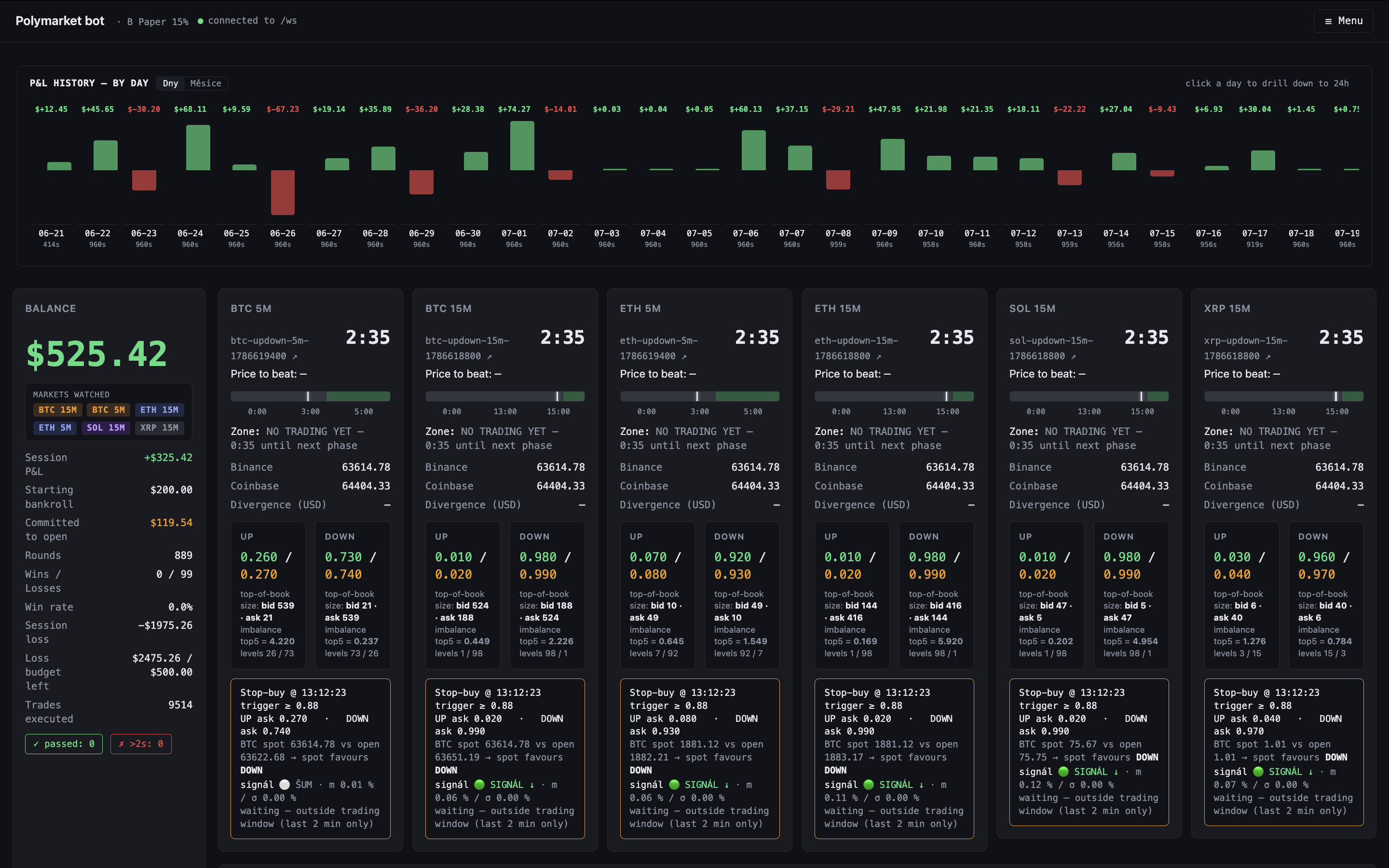
The interface is only the visible layer. The real product is a connected system that can ingest markets, run independent strategies, protect capital, surface failures and keep operating without constant supervision.
Input6 live markets
→Shared real-time market data
LogicIndependent strategies
→Rules and decisions per wallet
ExecutionPaper or live
→The same product, different capital
FeedbackObserve & iterate
Performance, errors and health
03 / Build & deployment
Research moved directly into production code.
With AI coding agents in the terminal, I built the core system in Rust and deployed it to AWS. I configured the infrastructure, Google Workspace authentication, security, secrets and the connections between services and wallets.
There was no design-to-development translation layer. When a product decision changed, I could change the interface, the underlying behaviour and the deployed system in the same loop.
Deployment, service configuration and reliable operation.
Protected control surfaces, keys and secrets.
04 / Validate safely
Paper first. Live only when the system earns it.
Every strategy began in paper mode with simulated capital. This made it possible to verify decision logic, execution behaviour and the information shown in the control hub without putting real money at risk.
The same system could then run live wallets. Paper and live modes were not separate prototypes—they were two operating states of one product, which meant validation carried forward instead of being discarded.
01Paper
→Learn without financial exposure.
02Live
Move proven strategies to real wallets.
05 / Scale & observe
One strategy became ten wallets—and a new infrastructure problem.
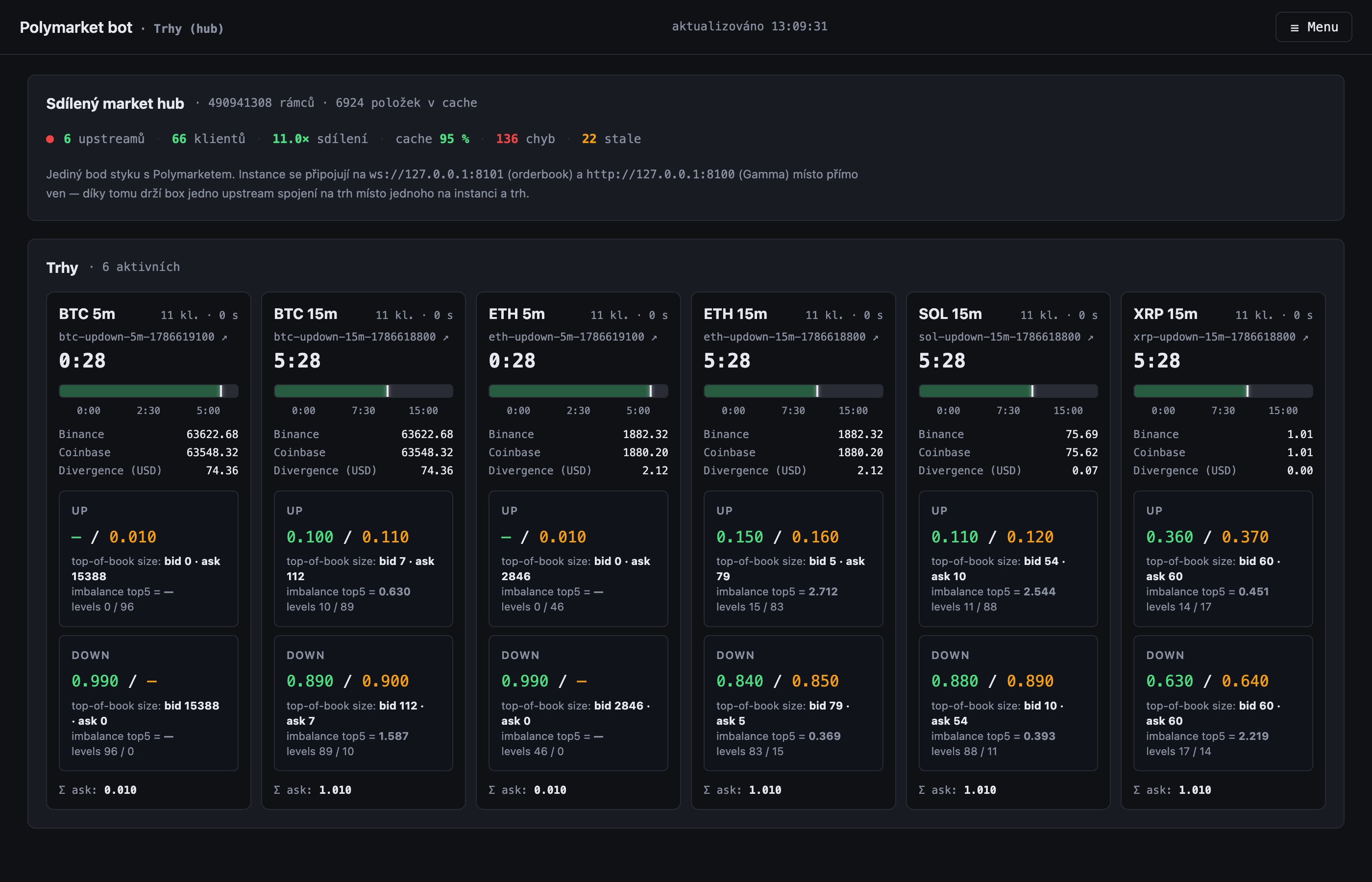
Moving from a single instance to ten independent wallets exposed constraints that did not exist in the first version: API limits, duplicated market connections, orchestration and the need to understand failures across the whole system.
I added shared market infrastructure and a home hub that makes performance, rejected operations, errors and system health visible. Six markets can be monitored in real time while strategies continue to run independently.
06 / What changed
The output was software. The real shift was ownership.
I did not become valuable because AI could generate code. The design experience still determined which opportunity to pursue, what information mattered, how to validate safely and when the system was good enough to move forward.
What changed was the distance I could carry those decisions. A signal from production could become a product improvement immediately—without waiting for another role, another handoff or another cycle of translation.
AI did not replace the product-design process. It closed the loop between judgment and impact.